What was meant to be a transition away from decades of authoritarianism has instead plunged Syria into an even more volatile and uncertain chapter. With power fragmented, minorities alienated, and governance collapsing, this summary exposes how one year of Islamist misrule has pushed the Syrian state to the brink.
Almost one year ago, the decades-long rule of the Assad dynasty came to an end, giving rise to widespread hope that Syria was finally entering a new era of justice, dignity, and political renewal. Syrians, exhausted by years of repression and destruction, dared to imagine a country capable of rebuilding its state, society, and future. Yet as the initial optimism gradually encountered unresolved power struggles and deep structural fractures, it became clear that the path forward would be far more complex than anticipated.
Against this backdrop, our writing departs from a strictly theoretical approach and instead adopts a more practical framework – one that directly engages with the country’s immediate political realities rather than distancing itself from the dark context in which we are living. Beginning with a purely theoretical analysis at this stage would risk extinguishing the fragile spark of hope that still exists for a nation struggling to remain united under the name “Syria.” As long as the prospect of reversing this catastrophic trajectory remains even faintly possible, intellectual reflection must be accompanied by analytical engagement to ensure that ideas remain rooted in the realities on the ground.
READ MORE: A path to justice for Syria
For this reason, this summary will not attempt to dissect or reconstruct the theoretical frameworks of the Syrian state. Instead, it seeks to expose the principal failures and abuses of the current regime of radical Islamists centered around former Al-Qaeda commander and now self-declared president Abu Mohammad al-Julani, presenting them with as much clarity as possible. In truth, there has been little to celebrate over the past year under the rule of this regressive and authoritarian faction.
In this article, we aim to provide a concise yet comprehensive overview of the regime’s failures in fulfilling its fundamental responsibilities, among them the reconstruction of the national economy and the restoration of Syrian unity. We will also examine its persistent inability to recognize and respect the boundaries of its authority as a transitional body, as well as its disregard for the principles of civil and human rights that should protect all Syrians equally. Furthermore, we will address its shortcomings in establishing an inclusive and cohesive national framework capable of representing the diverse components of Syrian civil society in shaping the country’s future.
Before addressing these dimensions, and for the benefit of readers less familiar with the current situation, we will first provide a brief overview of key developments and dates that have shaped Syria since the fall of the long-entrenched Ba’ath regime on December 8, 2024.
This article was written with information available as of November 14, 2025.
Short Summary of the Last Year in Syria
On December 8, 2024, the regime of Bashar al-Assad collapsed following a rapid offensive by Hay’at Tahrir al-Sham (HTS), which seized Damascus and several major cities. The Assad family subsequently fled abroad.
- In January 2025, HTS leader Ahmed al-Sharaa (known as Abu Mohammad al-Julani) was formally appointed as Syria’s transitional president.
- By February 2025, the new authorities announced plans for a „National Dialogue Conference”, tasked with drafting a constitutional declaration and defining the country’s new economic and institutional frameworks.
- Around the same time, the regime introduced a series of economic reforms that had devastating consequences for an already financially strained population. These included large-scale privatizations and deep cuts to the public sector. International media outlets such as Reuters reported that these measures – allegedly designed to attract Gulf investment – provoked mass protests and raised serious concerns regarding transparency, legality, and social justice.
- In March 2025, a new interim government was sworn in, including a handful of technocrats and minority representatives. However, observers quickly noted that genuine power remained concentrated within al-Julani’s inner circle. These concerns soon proved valid, as non-HTS members were systematically marginalized and denied meaningful authority.
- By May 2025, reports of widespread repression under HTS rule began to surface, including massacres, torture, and the systematic targeting of minorities, particularly in Alawite-dominated coastal regions in the northwest.
- On June 22, a terrorist attack targeted Mar Elias Church in Damascus, killing dozens. The regime’s muted and indifferent response to this assault on Syria’s Christian community provoked widespread outrage.
In mid-July 2025, violence escalated sharply in Suwayda in the far south, where HTS-affiliated forces carried out massacres against the Druze population. According to Reuters and Deutsche Welle, at least 321 people were killed in the initial attacks, with later estimates suggesting the death toll exceeded 900. Eyewitnesses and rights monitors documented field executions, attacks on civilians and hospitals, and the systematic destruction of infrastructure. These atrocities triggered a large-scale humanitarian crisis, displacing thousands and collapsing essential services such as electricity, water, and healthcare. The regime’s subsequent blockade of aid further deepened the suffering, effectively eliminating any prospect of reconciliation between the Druze minority and the HTS-led government in Damascus.
Meanwhile, some external actors, notably U.S. President Donald Trump and his Gulf allies, have attempted to rehabilitate al-Julani’s international image, including successful efforts to lift his terrorist designation.
At the same time, Trump has taken decisive steps to push Syria toward joining the Abraham Accords, viewing the initiative as a historic geopolitical achievement that must be expanded at any cost. For the Trump administration, integrating Syria into the accords has become a strategic priority, encouraging diplomatic concessions that overlook the regime’s abuses in favor of regional normalization. Yet such moves have only underscored the regime’s illegitimacy in the eyes of most Syrians. Few now believe that the current authorities can retain power or restore stability.
If Syrians still hope to preserve their country’s previous borders, such a goal can only be realized under a different leadership, one capable of rebuilding national unity and legitimacy. In less than a year, the HTS regime has severely damaged Syria’s social fabric and sovereignty, leaving the country in one of the most fragile states of its modern history. Al-Julani’s pursuit of personal gain and the erasure of his name from the UN list of designated terrorists has come at a staggering cost. His actions have resulted in Syria’s placement under Chapter VII of the UN Charter, exposing the nation to external intervention and deepening its diplomatic isolation. All of this has been done to serve one man’s ambition to sanitize his record, offering no tangible benefit to the Syrian people. As a result, Syria now faces the undermining of its sovereignty, the looming threat of foreign military involvement, and growing alienation from the international community, all so that al-Julani might secure personal legitimacy at the expense of the nation’s future.
Temporary President
One of al-Julani’s many missteps is his failure to acknowledge that he is merely an interim president of Syria, not an elected one. This position inherently limits his mandate: He should refrain from making major or irreversible decisions, as interim leaders are generally expected to avoid long-term or highly political actions unless absolutely necessary. Unfortunately, this has not been the case with al-Julani on numerous fronts.
One of the clearest examples of such a “major decision” involves matters of war and peace – most notably, his stated intention to renegotiate the 1974 ceasefire agreement between Syria and Israel. Such an act would represent one of the most irreversible and consequential decisions any leader could contemplate. To be entirely fair, however, part of the responsibility lies with the international community, which has allowed Israel to repeatedly violate Syrian sovereignty and disregard its obligations under the existing ceasefire by conducting airstrikes across the country and occupying additional territory in the south. Instead, it now seeks to negotiate a more favorable new accord with the interim extremist regime in Damascus – one that lacks both the jurisdiction and legitimate authority to engage in such critical matters.
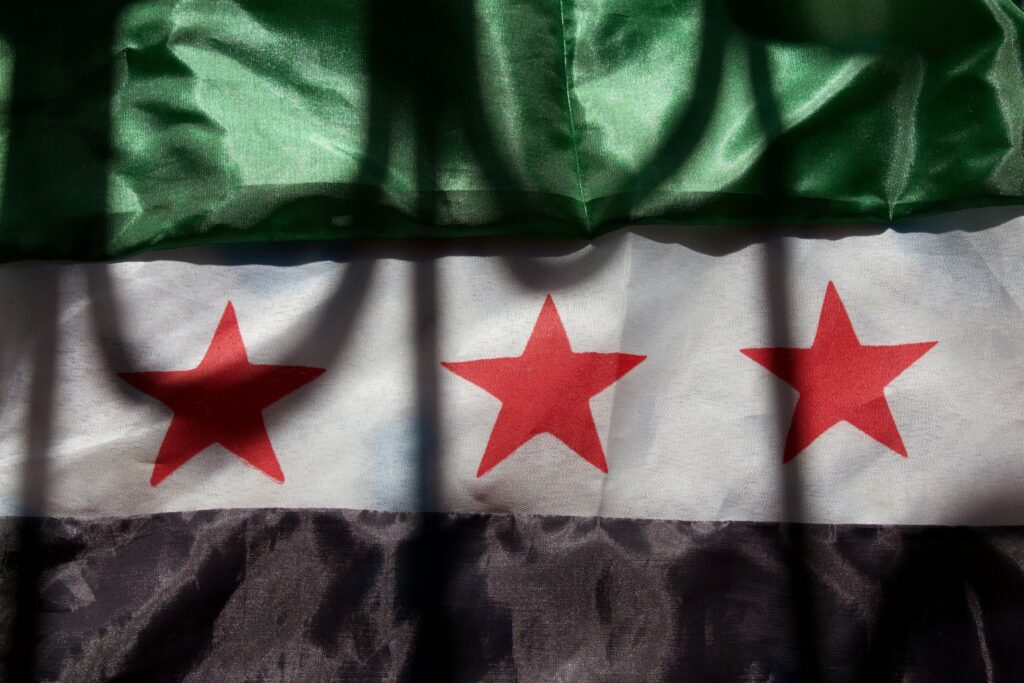
Another example of al-Julani’s misuse of his temporary authority is his ongoing effort to reshape Syria’s once progressive and culturally secular character. Even in matters that might appear minor, such as altering the state emblem and flag, he has acted without any consideration for public opinion or national consensus. His openly declared intention to change the national anthem and further Islamize the state reinforces this pattern. Not even Syria’s cultural and historical holidays have been spared. For instance, Martyrs’ Day on May 6 has been modified, among others, to fit the ideological narrative of his administration. These actions, along with numerous similar examples, demonstrate how this so-called interim president is interfering in decisions that could irreversibly reshape Syria’s identity beyond repair. Not to mention the foreign Islamist jihadists who are now, gradually but systematically, being granted Syrian citizenship by the current regime, apparently as a “reward” for their years of violence in Idlib. Although this may appear to be a minor issue in the short term, it is almost certain to result in deeper radicalization within Syrian Islam and a demographic transformation that the majority of Syrians neither support nor desire.
Another area in which al-Julani has grossly misused his authority stems from his terrorist past, which has placed Syria in a profoundly humiliating position. his disgraceful record as a jihadist commander can never be erased. Such complications could have been entirely avoided had Syria been led by a regular, legitimate interim president, one without a violent history and extremist agenda. Yet, it appears there is little international will to change a situation that remains profitable for all the foreign powers currently meddling in Syria, without exception.
Finally, it is striking to observe how this temporary president has, in less than a year, cultivated an ego large enough to sustain a cult of personality around himself through a barrage of cheap propaganda reminiscent of the same dictatorial arrogance once exhibited by Bashar al-Assad, who was raised from birth to believe he owned the nation.
The image of Al-Julani – a former jihadist now seated confidently discussing politics, ideology, economics, history, and philosophy, and perhaps even medicine if the occasion demanded, is both surreal and absurd. The way he answers every question with unshakable self-assurance, as though genuine experts were taking notes from him – especially during his recent visit to the U.S. – makes one wonder what parallel universe this man inhabits: a universe in which he is not an unelected, temporary jihadist president, but rather a self-proclaimed, all-knowing figure at the center of his own cult.
The Development of a Political Framework
One of the most critical tasks for any post-revolution society is rebuilding and reunifying the nation – a task that has been entirely neglected by Syria’s current jihadist leadership. Their reckless governance has severely damaged the foundations necessary to restore this fractured country, starting with one of the most essential goals: reuniting Syria’s territory.
Logically, meaningful political progress cannot occur without first reestablishing the country’s recognized borders. Yet, following the collapse of the Ba’ath regime in December 2024, already fragmented power structures have further entrenched and consolidated among multiple actors: primarily HTS under al-Julani, Kurdish forces in the north and northeast, and local militias and foreign forces, including Israel, occupying parts of the south.
As a result, the Damascus-based interim authorities now control only limited areas, sections of the capital, parts of the central corridor, and a few western zones, making their hold on power weaker and less stable than even the final years of Assad’s regime. This instability is compounded by the inevitable loss of sovereignty that will result from deals and concessions to foreign actors, particularly the United States, in exchange for lifting the terrorist designation of al-Julani (commonly known today as Ahmed al-Sharaa). The only significant attempt to negotiate internally was a March 2025 meeting between al-Julani and Kurdish military leader Mazloum Abdi, which produced no meaningful or lasting agreement.
Trust between the Damascus authorities and Syria’s minority communities has been utterly destroyed. The Alawites in the coastal region and the Druze in Suwayda and Damascus suburbs have endured large-scale massacres by HTS-affiliated groups, accompanied by well-documented human rights abuses. These atrocities have prompted both communities to seriously consider federalism or even full independence, having lost all hope of cooperation with the current leadership. Similarly, the Syrian Christian community has largely severed ties with the central regime, particularly after the Mar Elias Church attack on June 22, and the regime’s dismissive response and empty promises in its aftermath.
In addition to the widespread loss of optimism among Syrians, HTS’s legal and political measures have done nothing to foster collective governance. By dismantling virtually every political framework inherited from the Ba’ath era and banning nearly all parties and groups that had operated under Assad, the transitional authorities have made a strategic error. Even acknowledging the corruption and repression of the previous regime, erasing the entire political landscape and attempting to restart from zero is not a practical solution in a country already highly fractured and unstable. While some bans may have been justified, a selective and targeted approach would have been far more effective than wholesale destruction, leaving HTS as the sole organized political actor.
National Unity
The repeated massacres carried out by the ruling interim regime or affiliated groups, composed of various political-Islamist factions, against Syria’s religious minorities have pushed even the smallest communities, such as the Druze, to consider independence. They now view any solution that reduces the centralized power of this jihadist regime as legitimate. This marks a dramatic shift: unlike the Kurds, the Druze had never seriously contemplated autonomy or secession, even during the darkest years of the war. In fact, Suwayda was the only major Syrian city that continued to rebel and protest during Assad’s last years in power. Their current stance is a direct result of the brutal rule imposed by this violent leadership.
The central authorities in Damascus now control even less territory than the Assad regime did in its final years, highlighting the weakness and fragility of the current HTS-led administration. International tolerance of this regime appears largely pragmatic: It serves temporary geopolitical purposes by maintaining an inexperienced interim president with a criminal record and a jihadist background, someone who is willing to sign almost any agreement at minimal political cost. These conditions further fragment Syria, pushing the country farther from the prospect of reunification within its internationally recognized borders.
The regime has shown no genuine intention of rebuilding a functioning state, neither politically nor bureaucratically. Its unwillingness became apparent almost immediately upon taking Damascus, when authorities looted and dismantled state institutions, exploiting the chaos that followed the fall of the Ba’ath regime. The October 2025 parliamentary elections were little more than a façade and empty performance of legitimacy without any genuine effort to create credibility.
READ MORE: From a Revolutionary Idea to Repression: Ba’athism Under Assad’s Bloody Rule

Al-Julani’s own actions reveal both his inexperience and authoritarian mindset. He has made it explicitly clear that decision-making will remain entirely under his control. By dismantling the remaining, albeit largely ineffective, political parties from the Ba’ath era, he eliminated even the appearance of a functioning political framework. Under his system, he personally appoints one-third of parliament – precisely enough to block any parliamentary attempt to oppose or overturn presidential decisions. By contrast, even the Assad dictatorship maintained at least a diplomatic façade to mask its authoritarianism and one-party rule. Al-Julani, however, neither disguises his autocracy nor hesitates to act on it openly, demonstrating an unprecedented level of brazen control.
Syria’s Economy on the Auction Block
To this day, the jihadist regime sustains itself primarily through privatization and the sale of sovereign sectors – such as electricity – supplemented by financial aid from Saudi Arabia and Qatar. The result has been an economic catastrophe in the first year of its rule. Yet this aid comes at a cost: The regime has sold virtually everything it could, including touristic areas such as parts of Mount Qasioun, to Gulf-based private investors and promoted this step as modernization and reconstruction of touristic areas. In doing so, they have not only sacrificed valuable economic assets but also sites of profound historical and cultural significance, which should never have been commodified for foreign profit. This approach reflects the regime’s broader disregard for Syria as a sovereign nation, a perspective partly explained by the presence of foreign fighters within HTS. Rights to buy, develop, or build in these areas are allocated through unclear processes, leaving ordinary Syrians with no oversight or means to ensure accountability.
In practice, such opportunities overwhelmingly benefit al-Julani’s inner circle, his Gulf-based contacts, and affiliated companies and Syrian partners. Reconstruction faces further obstacles due to the lack of a secure environment for investment. Stability is unattainable under a government dominated by jihadists, operating without a structured legal framework. The Islamist leadership continues to govern through intimidation, deploying unofficially appointed sheikhs in every ministry to enforce HTS directives. Their methods, rooted in fear, threats, and pressure, mirror those previously employed in Idlib, but this time they are implemented nationwide with tacit support from Western powers.
Another significant limitation on economic recovery is the limited resources under the regime’s control. Most of Syria’s natural resources lie in the northeast, now under Kurdish administration. Meanwhile, the Damascus-based authorities no longer maintain effective control over borders, further weakening their economic base. As a consequence, the areas under jihadist control are steadily deteriorating, compelling the regime to privatize and sell off essential public sectors. By any measure of fair economic governance, such sectors should remain public goods: affordable and reliable electricity is essential for national development and economic stability. These short-sighted and politically naïve policies not only undermine Syria’s economic recovery but also erode national sovereignty, as authorities sell off vital national assets simply because of the lack of alternatives. The result is a stark illustration of the inexperience and unpreparedness of the Islamist factions currently in power.
Military and Security
The regulation of weapons and the control of force represent one of the most critical challenges facing post-war Syria, not only because they are vital for protecting civilians, but also because they are core conditions for attracting investment and reviving the devastated economy. No meaningful reconstruction effort can succeed without first ensuring basic security and stability. In this regard, al-Julani’s leadership has failed decisively. The current military structure in Syria is fragmented, poorly organized, heavily infiltrated, and massively devastated after heavy Israeli attacks on military sites across the country following al-Julani’s takeover. The Syrian armed forces now include a large number of foreign fighters brought by al-Julani from Idlib. These individuals are not trained as professional soldiers but function as irregular jihadist combatants with little sense of hierarchy or discipline. Under such circumstances, transforming them into a unified and professional national army is unrealistic – particularly in a country still struggling to rebuild its institutions from the ground up.
READ MORE: From Euphoria to Reality: What Syrians Must Demand from Their New Leadership
The problem is compounded by al-Julani’s reckless decision to dismantle all pre-existing military institutions inherited from the Ba’ath era, leaving behind no institutional framework capable of supporting a coherent security apparatus. This short-sighted move has created a dangerous vacuum that undermines both national stability and the prospects for a functioning state. Another grave error was al-Julani’s deliberate exclusion of moderate, high-ranking officers who had defected from the Syrian army during the early years of the 2011 uprising but who had refused to join jihadist factions. These men are experienced, relatively untainted by war crimes, and unconnected to extremist movements – they were uniquely positioned to lead the armed forces during this transitional period. Instead, al-Julani has chosen to elevate foreign militants with jihadist backgrounds and minimal formal training, prioritizing ideological loyalty over competence. In many cases, these appointees act independently of his authority, operating more as warlords than as disciplined officers. It remains unclear whether this lack of control over Islamist militias is a deliberate tactic designed to maintain an atmosphere of fear and instability that al-Julani can exploit politically, or whether it reflects his genuine inability – or unwillingness – to assert authority over them. Either possibility paints an unpromising picture of Syria’s security landscape.
Finally, an unresolved question concerns the potential participation of the Syrian government in international efforts against ISIS. Given that a significant portion of al-Julani’s forces and commanders have jihadist or terrorist backgrounds, it remains uncertain whether he possesses the capacity or the will to bring order to the chaos he has created. What is clear, however, is that without a coherent and accountable security structure, Syria risks descending into yet another cycle of armed conflict.
Human and Civil Rights
Civil rights, especially women’s rights and personal freedoms, became some of the most urgent concerns when HTS seized control of Damascus. These issues were understandably at the forefront for moderate Syrians, who feared that the country might be pushed toward a reactionary religious order without precedent in modern Syrian history. Even at its worst moments of authoritarianism and violence, Syria had never been governed primarily through a strict religious law – unlike certain states elsewhere in the region. Religion and tradition have certainly shaped aspects of Syria’s legal and social life, but never to the extent of dictating the details of daily behavior from clothing to food to basic social conduct.
For this reason, from the first day of the HTS rule, preserving at least a minimal level of civil freedoms became an urgent priority. Yet, even the mere preservation of these rights is insufficient. True progress demands active protection, reinforcement, and expansion. Unfortunately, the signals emerging from the new authorities have been deeply troubling. As many Syrians expected from such a radical faction, early developments indicate a trajectory that is anything but reassuring. Despite the significance of this issue to the public, the leadership has approached it carelessly, substituting genuine reform with superficial public relations and state-sponsored propaganda. One of the starkest examples is the appointment of Hind Kabawat as Minister of Social and Labour Affairs – notably the only woman in the government. Her presence has little substantive impact on major political or security decisions; instead, it serves primarily to soften al-Julani’s image and obscure the reality that virtually all senior figures around him share the same jihadist history. Rather than building confidence, this decision has been widely perceived as an insult. It reinforces the belief that, for al-Julani and his fundamentalist circle, women’s rights and civil liberties are not policy priorities but tokens employed to impress international audiences.
A further example of this provocative and dismissive attitude can be found in the regime’s handling of mass abductions and gender-based violence. Numerous Alawite women and girls, though not exclusively, have been subjected to these crimes. This issue became particularly prominent after Amnesty International documented several cases, prompting public pressure on al-Julani to form a so-called “fact-finding committee.” Predictably, the committee operating under the authority of a militant faction concluded that it had received no reports of abductions at all (or maybe only in one case). As many anticipated, its findings amounted to a denial rather than an investigation. This act is not an isolated failure but an illustration of a broader pattern: systematic neglect, denial, and the deliberate minimization of abuses committed under the new authorities.
The consistent refusal to acknowledge such violations demonstrates that repression is not incidental to the regime’s governance; it is, in fact, structural. This becomes even clearer when examining how the temporary authorities operate. The emerging system lacks a coherent legal framework, an accountable chain of command, or any monopoly on the use of force. Instead, it functions through intimidation, informal networks, and the deliberate cultivation of fear and chaos. Under such a system, abuses, even on a large scale, are reframed as “inevitable” or merely “unfortunate incidents,” while propaganda and symbolic gestures serve as distractions.
This militia-like approach exposes the true intentions of al-Julani and of those who now surround him in Damascus: a leadership more invested in consolidating control through coercion and disorder than in building a lawful, accountable state.
In reflecting on the current situation, it is essential to remember why Syrians rose up against the Assad dynasty and the Ba’ath Party in the first place. The revolt was not driven solely by deprivation; Syrians had at least the necessary access to basic services, education, and social rights, however limited.
What ultimately pushed people to resist were the profound political injustices: the denial of genuine political freedoms, the pervasive corruption embedded within the state, and the brutality of the security system, the ever-present fear of torture, arbitrary arrest, and enforced disappearance.
Measured against these original motivations, the situation under al-Julani becomes even more alarming. In barely a year, he has expanded the list of reasons to oppose the authorities and deepened the country’s existential crisis. Syrians are no longer debating political reform or institutional change, they are increasingly questioning whether Syria will continue to exist within its recognized borders at all. What once seemed fundamental truths, assumptions about national continuity and territorial integrity have become uncertain, destabilized by a regime whose actions threaten the very survival of the state.